You’re underestimating how much early childhood matters.
In our city, the ZIP code where you grow up can define almost every part of your life. For example, a child born and raised in a South Memphis neighborhood may attend under-resourced schools or see the doctor less often than children in wealthier areas because of cost or distance. Problems like these add up over time until life feels unbearable. Then, rather than getting to pursue their dreams, that child and their family are stuck in survival mode.
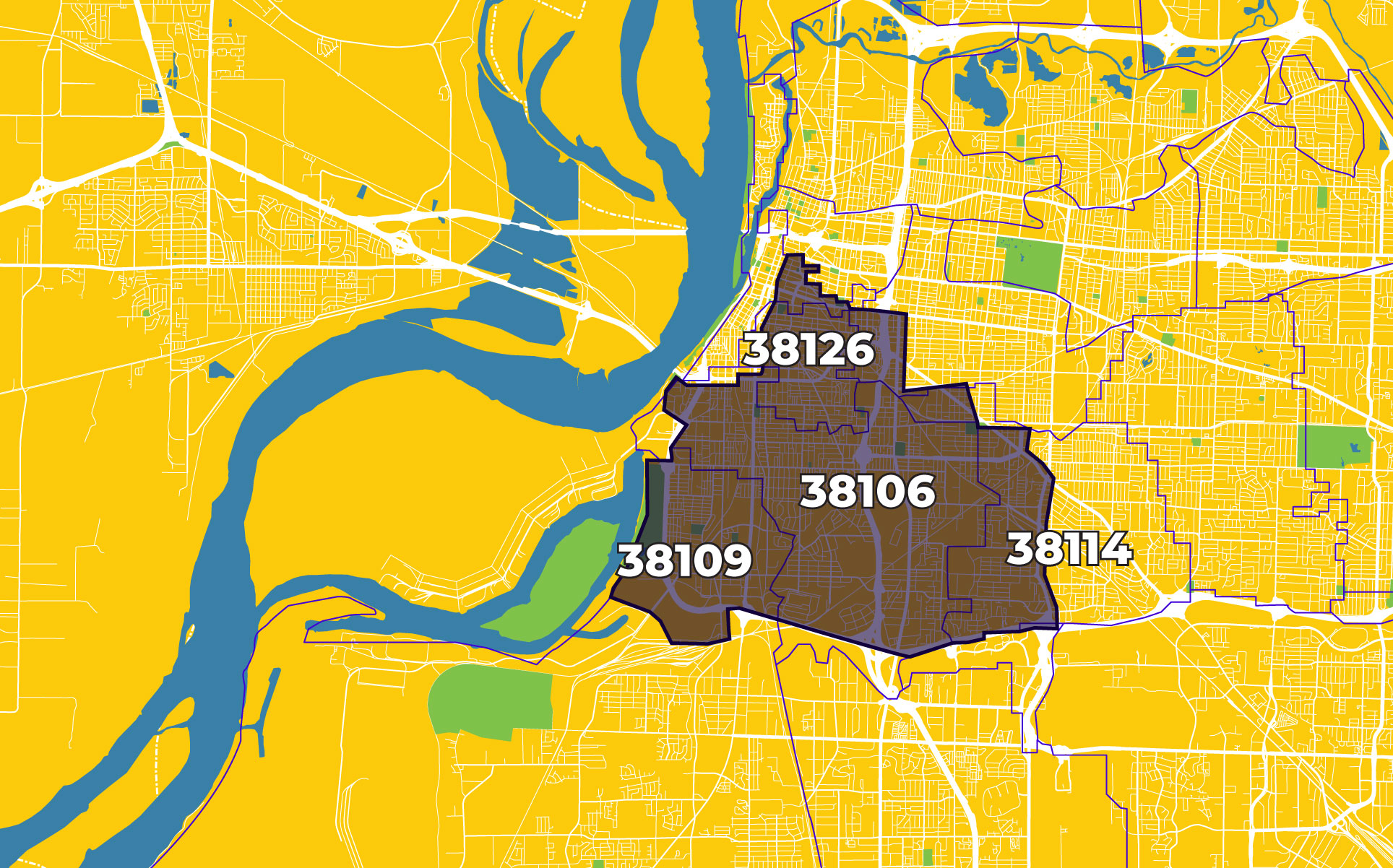
The earlier we intervene, the bigger the impact of those interventions. That’s why local partners have come together through the More for Memphis Early Childhood workgroup to discuss solutions to wide-ranging issues impacting early childhood care and education in the South Memphis Zone (SMZ). This zone includes all of ZIP codes 38106 and 38126, and parts of 38109 and 38114.
Porter-Leath, a major partner in the Early Childhood workgroup, has launched initiatives such as the Early Success Coalition and NEXT Memphis to support children, families, and early childhood professionals in a multitude of ways. These programs have been instrumental in moving the SMZ work forward, connecting the right partners to create a holistic support system. Kellie Spilman, Director of the Early Success Coalition, says the main purpose of the coalition is to “meet families in the community and help connect them to different agencies able to provide the resources that they need to thrive.” The ESC also offers a Parent Leadership Training Institute to help parents learn how to lead change in their communities, with two recent projects–concerning period poverty and public records respectively–gaining the attention of state legislators.
”Everyone comes together and they say, ‘Okay, I’m willing to do whatever it takes to make sure that children in Memphis have all of the resources that they need to thrive.
Kellie Spilman, MPH, CHES, IMH-E®Porter-Leath
According to Spilman, the benefit of being part of the SMZ Early Childhood workgroup is that it has expanded the list of people the Early Success Coalition can rely on when a certain service is needed. “Not everyone has every single tool that a family can need,” she says, “So by building these relationships between agencies and making sure we’re developing effective cross-referral systems, we are making it to where each agency–any family we meet–if it’s not something that we as an agency can provide, we know, ‘Oh, I can call so-and-so at this agency because they’re great at this,’ and we’ll make sure that this client gets what they need.”
In her time with the SMZ Early Childhood workgroup, Spilman has appreciated the willingness of partners to commit time and energy to the mission. “When you’re working with this group, no one ever says, ‘That’s not worth it. I’m too busy,’” Spilman explains. “Everyone comes together and they say, ‘Okay, I’m willing to do whatever it takes to make sure that children in Memphis have all of the resources that they need to thrive.
Why does early childhood education matter?
Did you know that being able to read in third grade is a crucial part of academic success and, subsequently, financial success later in life?
That’s why it’s concerning that less than half of third-grade students in Shelby County are reading on grade level. In 2025, only 29.2 percent of Memphis-Shelby County Schools students “met” or “exceeded” proficiency levels on the TN Ready third-grade ELA assessment. Meanwhile, the Tennessee average for “met” and “exceeded” in 2025 was 41.6 percent. The good news is that MSCS third graders have seen a 5.2% improvement on this measure since 2023, and parents, teachers, school administration, and school partners are working hard to improve student outcomes. Still, there is ample room for growth, and our city’s children deserve the investment and resources they need to help them reach their dreams.
Early literacy isn’t built in a single year. It comes from a series of stepping stones that you might overlook, such as:
- Language development, which begins at home.
- Meaningful and nurturing interactions with caregivers, which promote healthy brain development.
- High-quality Pre-K programming, which can increase performance through seventh grade.
Later investments, like literacy coaching, high-dosage tutoring, and summer learning camps, can also help students develop the skills they need to meet third-grade reading benchmarks.
Image courtesy of Circles of Success.
What are we doing?
The More for Memphis Early Childhood workgroup is collaborating to expand access to childcare and early education for more families in the South Memphis Zone. Here’s what that looks like:
Expanded Home Visitation
Voluntary home visiting programs promote long-term well-being for young children and their families in several ways. They help parents or guardians understand child development and early literacy, encourage early learning at home, and connect families with support services such as prenatal care and public benefits. Porter-Leath and the Early Success Coalition are providing trained professionals to conduct regular home visits with families of young children to support parenting practices, early development, and school readiness!
Childcare Shared Services
When parents or guardians are able to place their children in free or affordable childcare, they can rest assured there is a stable, safe place where their child will be taken care of when they’re at work or school. Children also benefit from interactions with other children their age and with professionals focused on promoting healthy child development.
NEXT Memphis and Porter-Leath are coordinating care to ensure private childcare centers have business support, classroom resources, and community services that help families navigate crises and achieve their goals. Childcare centers get this support without having to increase tuition.
Expanded Head Start
Head Start Preschool is open to families with children three- to four-years-old who live at or below the Federal poverty guidelines. Preschool gives children the daily opportunity to develop knowledge in literacy, language, math, and science that will prepare them for kindergarten and elementary school. Porter-Leath’s Head Start and Early Head Start programs teach children with a research-based curriculum that incorporates play, direct instruction, and hands-on projects.
By making Head Start available to more households, we’re developing future confidence and academic success for children in the South Memphis Zone.
Expanded Pre-K
First 8 Memphis (F8M) was the driving force behind the passage of the Pre-K for All ordinance in 2025, aiming to provide access to free pre-kindergarten for all three- and four-year-olds in Memphis and Shelby County. In addition to leading the Early Childhood workgroup, F8M has continued to enroll South Memphis Zone children in high-quality pre-K classrooms with a focus on closing literacy gaps. As a result, more children are now becoming kindergarten-ready, shaping their academic careers for the better.
Early Childhood in Numbers
Each person assisted through More for Memphis is more than a digit on a spreadsheet. These numbers represent tens and hundreds of children growing up with a network of support. These children are incredible assets for their community, and with the right resources and encouragement, they can achieve great things.
As of March 31st, 2026:
- 52 families have received home visiting services, already exceeding the Year 1 goal of 40 families.
- 60 students have received childcare access support, with a Year 1 goal of 178 students.
- 218 children have gained access to pre-K (though no target was set for Year 1).
Image courtesy of Circles of Success.
What We’ve Learned
No one can try to transform our local early childhood system without running into roadblocks along the way. While parts of the South Memphis Zone pilot have been resounding successes, we have new takeaways to incorporate into the plan going forward to overcome the challenges we’re facing:
- No Wrong Door: When people need services, they can easily fall through the cracks if they don’t have enough support. The Early Success Coalition’s “No Wrong Door” model makes sure families get connected to the most appropriate services based on what they need. In the business, this is called a “closed-loop referral”, and it means someone is looking out for you until you get what you need.
- Systemic Challenges: Shortages of childcare and home visiting program workers have reduced capacity. Additionally, lack of access to childcare subsidies has hurt enrollment and participation, especially for families who aren’t eligible for existing programs or face challenges related to transportation, employment, or mental health.
- Data Limitations: Currently, Early Childhood partners don’t have the ability to view shared, real-time data on enrollment, capacity, and families’ movement across programs. This kind of data would make it easier to make informed decisions and respond to emerging needs.
These are just a few of the key lessons from the work, and they have pointed us toward new opportunities to improve our collaboration and outreach.
We Need You Too.
While our Early Childhood partners are providing services and finding ways to make the system function better for children and families, we need support from Memphis and Shelby County residents to help More for Memphis grow!
We want to get 10,000 residents to sign onto our letter of support, telling our local government leaders that we’re calling for positive change and we know the way to get there.